Healthcare today depends on more than simply providing quality clinical care. Patients also expect convenient scheduling, easy access to their health information, timely communication, and a connected digital experience. When these services operate through separate systems, patients and staff can experience delays, duplicate data entry, and unnecessary friction.
This is where EHR integration for patient engagement becomes important. Connecting an electronic health record (EHR) with patient-facing tools allows healthcare practices to create a more coordinated experience while improving how information moves across their systems.
For practices evaluating ways to modernize their technology, solutions such as CarePITome can help bring different healthcare workflows together through integrated software and connected tools.
What Is EHR Integration for Patient Engagement?
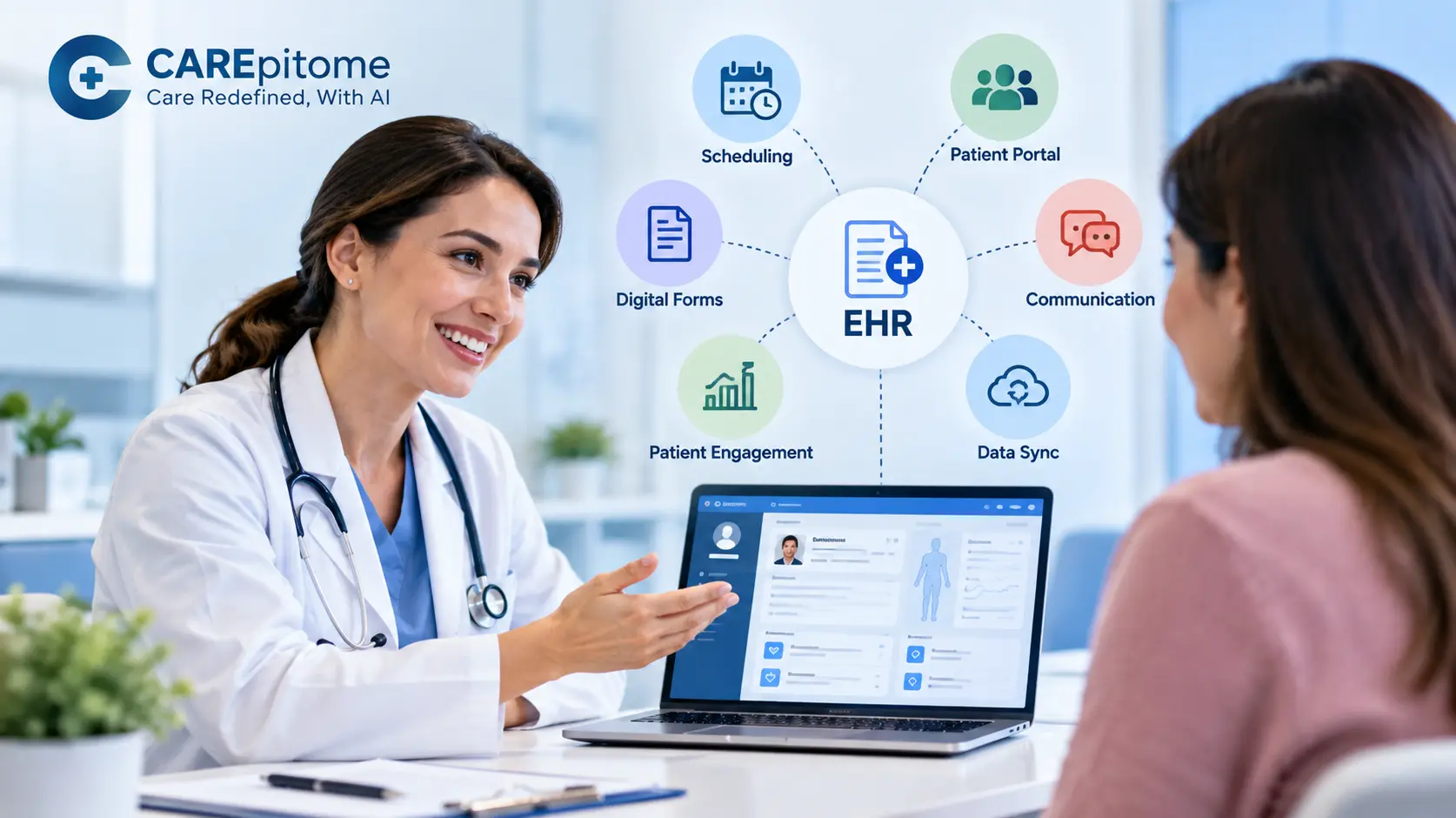
EHR integration for patient engagement is the process of connecting an electronic health record system with applications and platforms that patients and staff use regularly. These may include patient portals, online scheduling tools, communication systems, forms, reminders, and other healthcare applications.
Instead of keeping patient information in isolated systems, integration allows relevant information to move between connected platforms.
For example, when you connect a patient portal to EHR, a patient may be able to access selected health information, complete forms, review appointments, or communicate with the practice without staff having to manually transfer information between systems.
The goal is not simply to connect software. Effective integration creates a more consistent flow of information throughout the patient journey.
Why Patient Engagement Depends on Connected Systems
Patient engagement is influenced by how easy it is for people to interact with their healthcare provider. A disconnected technology environment can create unnecessary barriers.
A patient might schedule an appointment through one application, complete a form in another, and then provide the same information again during a visit. Staff may need to enter that information manually into the EHR.
With healthcare software interoperability, connected systems can reduce these unnecessary handoffs.
When the right platforms communicate with one another, practices can create smoother workflows for patients while reducing repetitive administrative tasks for staff.
Key EHR EMR Integration Benefits for Healthcare Practices
There are several practical EHR EMR integration benefits for healthcare organizations.
1. More Convenient Patient Experiences
Patients increasingly expect healthcare to offer the same level of digital convenience found in other industries. Online scheduling, digital forms, reminders, and portal access can make routine interactions easier.
When these tools communicate with the EHR, patients can interact with the practice without having to repeatedly provide the same information.
This can be especially useful for practices that want to improve the digital experience without adding more manual work for their teams.
2. Better Access to Patient Information
When connected systems are designed to sync patient data with EHR, information can flow into the appropriate clinical workflow rather than remaining isolated in a separate application.
This may help staff access information more efficiently and reduce the need to switch between multiple systems.
A well-integrated environment can also make it easier to maintain more consistent information across patient-facing and administrative workflows.
3. Reduced Manual Data Entry
Manual data entry consumes staff time and can introduce inconsistencies when information has to be entered multiple times.
Integration can automate parts of the information exchange process. For example, data submitted through a connected digital workflow may be transferred into the appropriate EHR workflow rather than requiring staff to copy and paste information manually.
Reducing repetitive administrative work can allow teams to spend more time on patient-facing responsibilities.
4. Improved Scheduling Workflows
Scheduling is one of the most frequent interactions between patients and healthcare practices.
An EMR integrated scheduling software solution can connect appointment scheduling with the practice's existing records and workflows. This can help reduce disconnected scheduling processes and give patients a more convenient way to request or manage appointments.
For practices looking to improve scheduling efficiency, understanding how integration works is an important part of evaluating healthcare software.
You can explore CarePITome's EHR integration software to learn more about how connected workflows can support modern healthcare operations.
Connecting a Patient Portal to an EHR
One of the most common integration priorities is to connect patient portal to EHR.
Patient portals give patients access to digital healthcare services, but their value can increase when the portal is connected to the practice's central health record system.
Depending on the systems involved, integration can support workflows such as:
- Accessing patient information through the portal
- Submitting digital forms
- Managing appointments
- Sending messages to the practice
- Receiving reminders and updates
- Sharing relevant information with healthcare staff
The exact capabilities depend on the EHR, portal, integration method, and security controls used by the organization.
The key principle is that patient-facing technology should not operate independently from the systems staff use to manage care.
The Role of Healthcare Software Interoperability
Healthcare software interoperability is essential when practices use multiple applications.
An EHR may be responsible for clinical records, while another application manages scheduling, communication, patient forms, or engagement activities. Without interoperability, each platform can become an information silo.
Interoperability allows systems to exchange information through appropriate interfaces and integration methods.
This creates a more connected technology environment where patient and operational information can move between relevant systems instead of remaining trapped within individual applications.
For organizations considering integration, it is important to evaluate compatibility, available APIs, data mapping, security requirements, and the specific workflows that need to be connected.
Patient Engagement Platform Integration and Communication
Patient engagement extends beyond appointments and medical records. Practices may also use digital tools for reminders, follow-ups, notifications, surveys, and other communications.
With patient engagement platform integration, these tools can potentially work alongside the EHR instead of operating as independent systems.
For example, a practice may want an engagement platform to use relevant appointment information from the EHR to support automated patient communications.
Connected workflows can help practices create more consistent interactions while reducing the administrative effort involved in managing separate systems.
How EHR Integration Supports Staff Efficiency
Patient engagement technology should benefit both patients and healthcare teams.
When staff members need to manually move information from one system to another, administrative workloads can increase. Multiple systems can also make it harder to identify which source contains the latest information.
Integration can simplify workflows by allowing systems to exchange relevant data automatically or semi-automatically.
However, successful integration requires more than technical connectivity. Practices should define which information needs to move, when it should move, who should have access, and how errors or exceptions will be handled.
What to Consider Before Integrating Your EHR
Before selecting an integration solution, healthcare practices should evaluate their existing environment and define their objectives.
Important considerations include compatibility with the current EHR, the types of data that need to be exchanged, workflow requirements, security and privacy controls, scalability, and implementation support.
It is also useful to identify the patient interactions that create the most friction. For one practice, scheduling may be the highest priority. For another, portal access, digital forms, or communication workflows may have a greater impact.
Starting with clearly defined use cases can make an integration project more manageable and measurable.
Building a More Connected Patient Experience
Modern patient engagement depends on more than adding another application to a healthcare technology stack. The systems behind the patient experience need to work together.
EHR integration for patient engagement can help connect clinical records with patient-facing services such as portals, scheduling, forms, and communication tools. When implemented appropriately, integration can reduce fragmented workflows, improve information flow, and make everyday interactions more convenient.
Practices exploring connected healthcare technology can learn more about CarePITome and its approach to healthcare software integration. You can also visit the CarePITome blog for additional information about healthcare technology and digital workflows.
To discuss your organization's specific integration requirements, schedule a demo with the CarePITome team.