
Patient engagement has become an important part of delivering a better healthcare experience. Patients are more likely to stay connected with a practice when communication is convenient, appointments are easy to manage, follow-up is consistent, and they feel supported throughout their care journey.
For medical practices, effective patient engagement strategies go beyond simply sending appointment reminders. Engagement starts before a patient walks through the door and continues after the visit. The right approach can help practices build stronger patient relationships, encourage follow-through, and create a more consistent healthcare experience.
Modern healthcare technology makes many of these processes easier to manage. Platforms such as CarePITome can help practices connect scheduling, communication, patient management, and follow-up workflows in one broader digital ecosystem.
1. Make Appointment Scheduling Simple
One of the most practical ways to improve the patient experience is to make scheduling convenient.
Patients may postpone care when booking an appointment requires multiple phone calls, long hold times, or limited scheduling options. Online scheduling gives patients a way to request or book appointments when it is convenient for them.
An effective scheduling workflow should be easy to use on both desktop and mobile devices. It should also provide clear appointment information and minimize unnecessary steps.
For practices working to improve this part of the patient journey, patient scheduling software can help create a more convenient digital scheduling process.
2. Communicate Before the Appointment
Patient engagement starts before the appointment itself.
Automated appointment confirmations, reminders, preparation instructions, and digital forms can help patients know what to expect and reduce missed appointments.
Communication should be timely and relevant rather than excessive. A reminder close to the appointment can be useful, while pre-visit instructions can help patients arrive prepared.
This is one of the simplest patient engagement examples because it connects communication directly to a specific patient need.
3. Personalize the Patient Experience
Patients do not all have the same needs, preferences, or communication styles.
Personalization can involve using a patient's preferred communication channel, providing relevant reminders, or tailoring follow-up information based on the type of care they received.
Even basic personalization can make communication feel more relevant.
Practices should use the information available through their systems responsibly and ensure that personalization supports the patient experience rather than making communication feel intrusive.
4. Reduce Friction During Check-In
The arrival and check-in process can significantly influence a patient's overall impression of a practice.
Long forms, repeated questions, and unclear instructions can create unnecessary friction. Digital registration, online intake forms, and integrated patient information can make this process more efficient.
Reducing administrative obstacles gives staff more time to focus on patients and can make visits feel more organized.
Patient engagement is not limited to communication. Every point of interaction contributes to how patients experience the practice.
5. Use Patient Engagement Technology
Patient engagement technology can connect several parts of the patient journey.
Depending on the practice's needs, technology may support scheduling, appointment reminders, patient communication, digital intake, follow-up, surveys, or patient management.
The key is to use technology to solve specific workflow problems rather than adding more disconnected software.
An integrated approach can help staff manage patient interactions more consistently while giving patients easier access to the services they need.
6. Strengthen Follow-Up After the Visit
The patient relationship does not end when the appointment is over.
Follow-up can include reminders about treatment plans, instructions, future appointments, screenings, or other recommended actions.
Consistent post-visit communication can help patients stay connected with their care plan and reduce the likelihood that important next steps are forgotten.
Practices looking for ways to automate and organize post-visit communication can explore CarePITome's patient follow-up software.
This is particularly useful for practices that have many patients requiring recurring communication and follow-up.
7. Make It Easy to Stay in Touch
Patients may have questions after a visit or need clarification about scheduling, services, or next steps.
A practice should provide clear ways for patients to communicate with the appropriate team.
Depending on the practice, this may include secure messaging, phone support, portal communication, or other digital channels.
The goal is to make communication accessible without overwhelming staff with unstructured requests.
When communication channels are clearly defined and connected to the overall workflow, patients know where to go for help.
8. Focus on Patient Retention, Not Just Acquisition
Getting a new patient is only one part of practice growth. Maintaining relationships with existing patients is equally important.
This raises an important question: how to improve patient retention?
Retention often starts with consistency. Patients are more likely to continue using a practice when appointments are easy to schedule, communication is clear, follow-up is reliable, and their overall experience meets expectations.
Practices can also use appropriate reminders for preventive care, routine visits, recurring treatments, and follow-up appointments.
The goal is to make it easy for patients to continue their care rather than requiring them to restart the process each time they need an appointment.
9. Use Patient Data to Improve Engagement
Effective engagement requires understanding what happens throughout the patient journey.
A practice can review information such as missed appointments, scheduling patterns, follow-up completion, communication responses, and patient feedback to identify areas that need improvement.
This does not mean collecting data simply for the sake of collecting it. The information should support specific operational decisions.
For practices evaluating a more connected workflow, patient management software can help organize patient-related information and support day-to-day administrative processes.
When engagement data is actionable, practices can make more informed decisions about communication and workflow improvements.
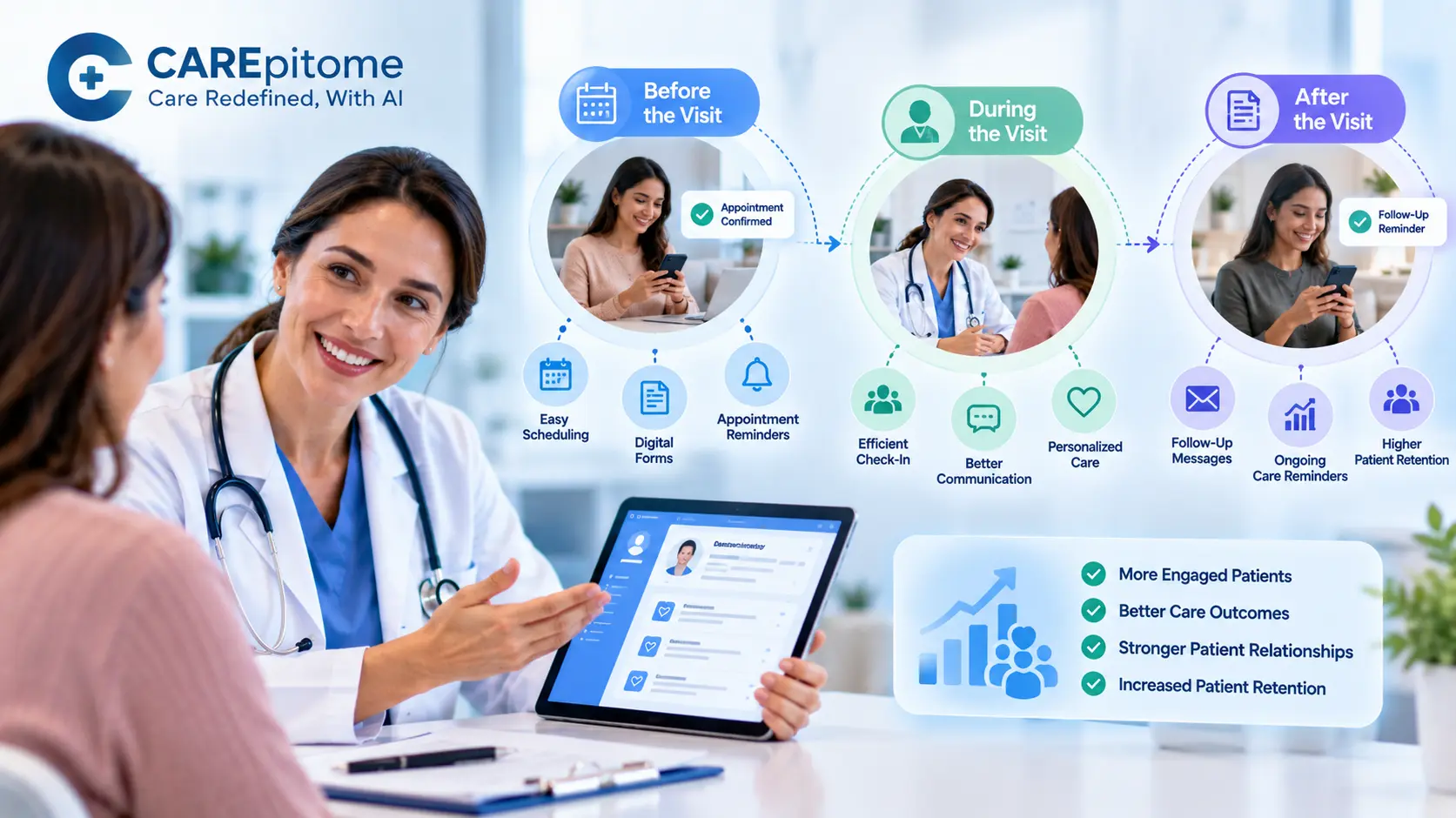
10. Create Engagement Across the Entire Patient Journey
The most effective patient engagement strategies do not focus on a single interaction.
Engagement should be considered across three major stages:
Before the visit: Scheduling, appointment reminders, digital forms, preparation instructions, and communication.
During the visit: Efficient check-in, organized workflows, clear communication, and a patient-centered experience.
After the visit: Follow-up communication, care reminders, future scheduling, feedback, and ongoing patient support.
This approach helps practices build a more connected experience rather than treating every interaction as an isolated event.
For organizations evaluating how technology can support the full patient journey, CarePITome offers tools designed around connected healthcare workflows.
What Makes Patient Engagement Strategies Effective?
There is no single engagement strategy that works equally well for every medical practice. The most useful approach depends on specialty, patient population, staffing, technology, and operational goals.
However, successful programs generally share several characteristics. They are convenient for patients, manageable for staff, consistent across channels, and connected to real healthcare workflows.
Technology should make these processes easier rather than introducing more complexity.
Practices should also regularly review patient feedback and workflow metrics to determine what is working and where patients continue to experience friction.
For more healthcare technology insights and practical guidance, visit the CarePITome blog.
Building a More Engaged Patient Base
Strong engagement is built through many small interactions rather than one large initiative. A convenient scheduling experience, timely reminder, simple check-in process, relevant follow-up message, and accessible communication channel can all contribute to a stronger relationship between patients and their healthcare practice.
By combining thoughtful workflows with appropriate patient engagement technology, practices can make it easier for patients to participate in their care and remain connected over time.
Practices exploring a patient engagement platform for medical practices should focus on how well the technology integrates into existing workflows and whether it addresses the specific areas where patients and staff experience friction.
To explore CarePITome's healthcare technology solutions, visit the About page or schedule a demo.